Two mobile apps, one workflow, a ticket in seconds.
A broken projector in a convention-center ballroom used to mean tracking down a staff member and describing the room from memory. Now the person in the room reports it in seconds, photo attached, routed straight to the AV team. We built the two apps behind that for Music City Center in Nashville, one for venue crews, one for event clients, over a shared support workflow.
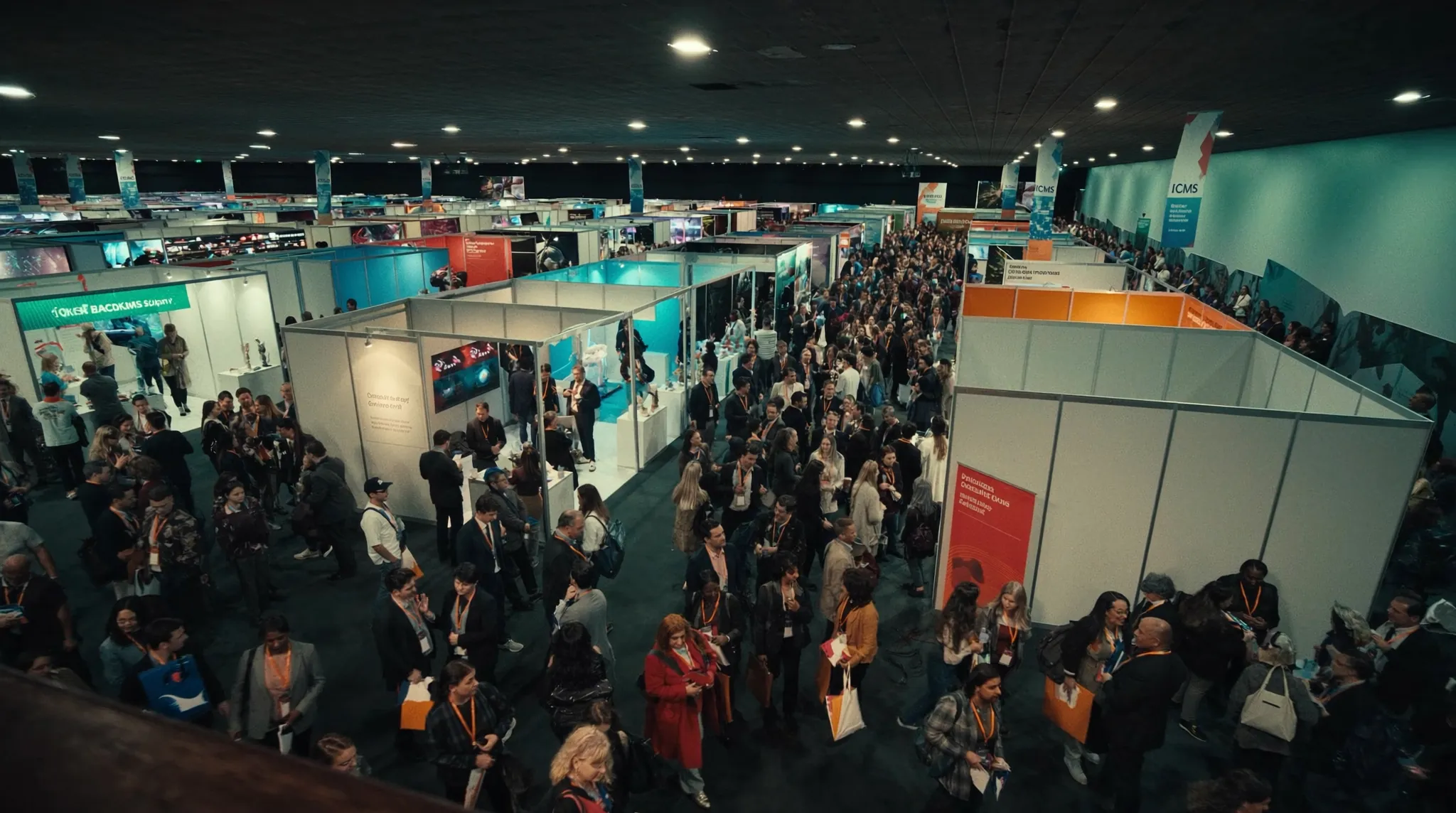
The ask was a form. The real work was the route.
A broken projector in a ballroom meant tracking down a staff member and describing the room from memory, with no timestamp and no record of how it was handled. Two audiences needed the same thing from opposite sides: venue crews raising issues, and event clients asking for help from their own room, each landing with the right team.
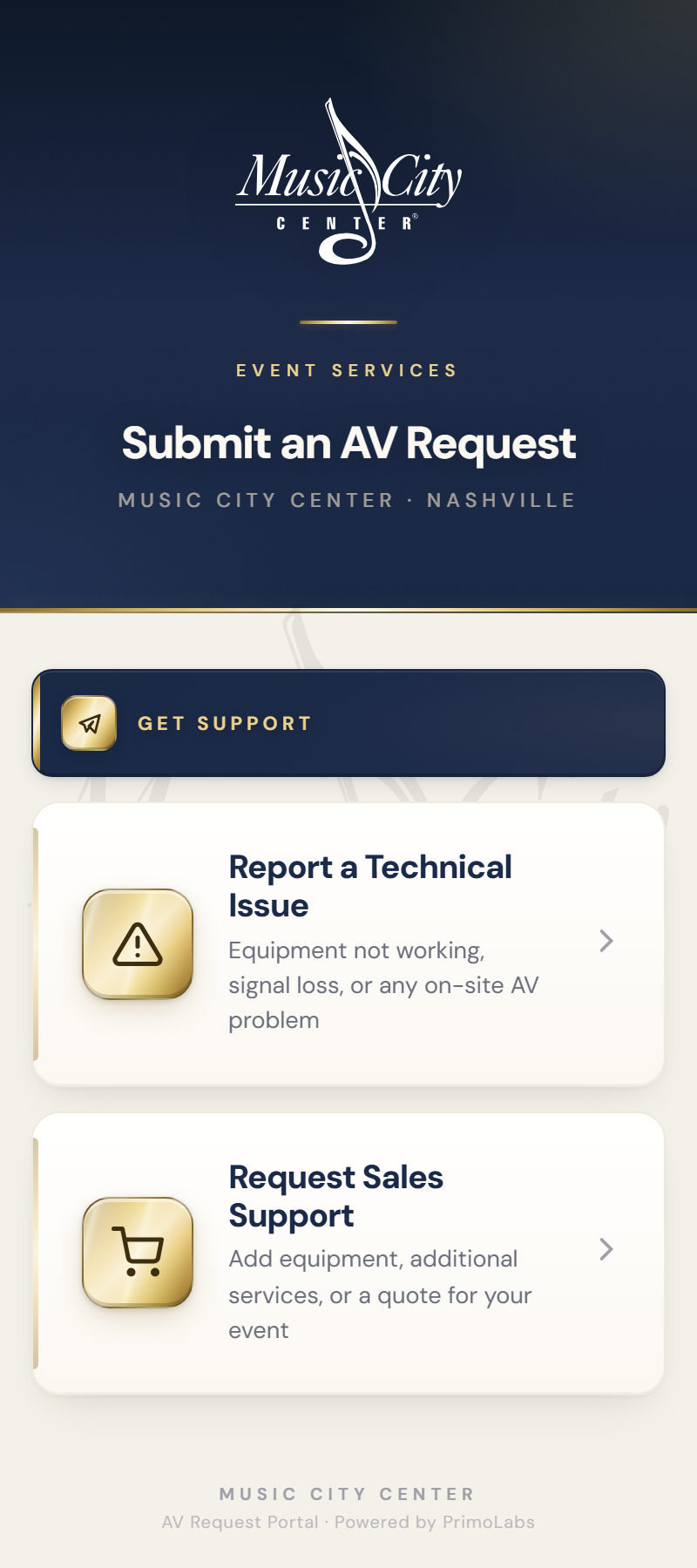
Two ways in, one workflow
A request from anyone in the building, in the venue's own brand, routed to the desk that owns it.
Report from the room, in seconds
A QR code opens the venue's request app: pick the room or space, choose technical support or an event and sales request, and it lands with the right team, in the venue's branding.
What changedThe person in the room reports it themselves, instead of finding someone to tell.
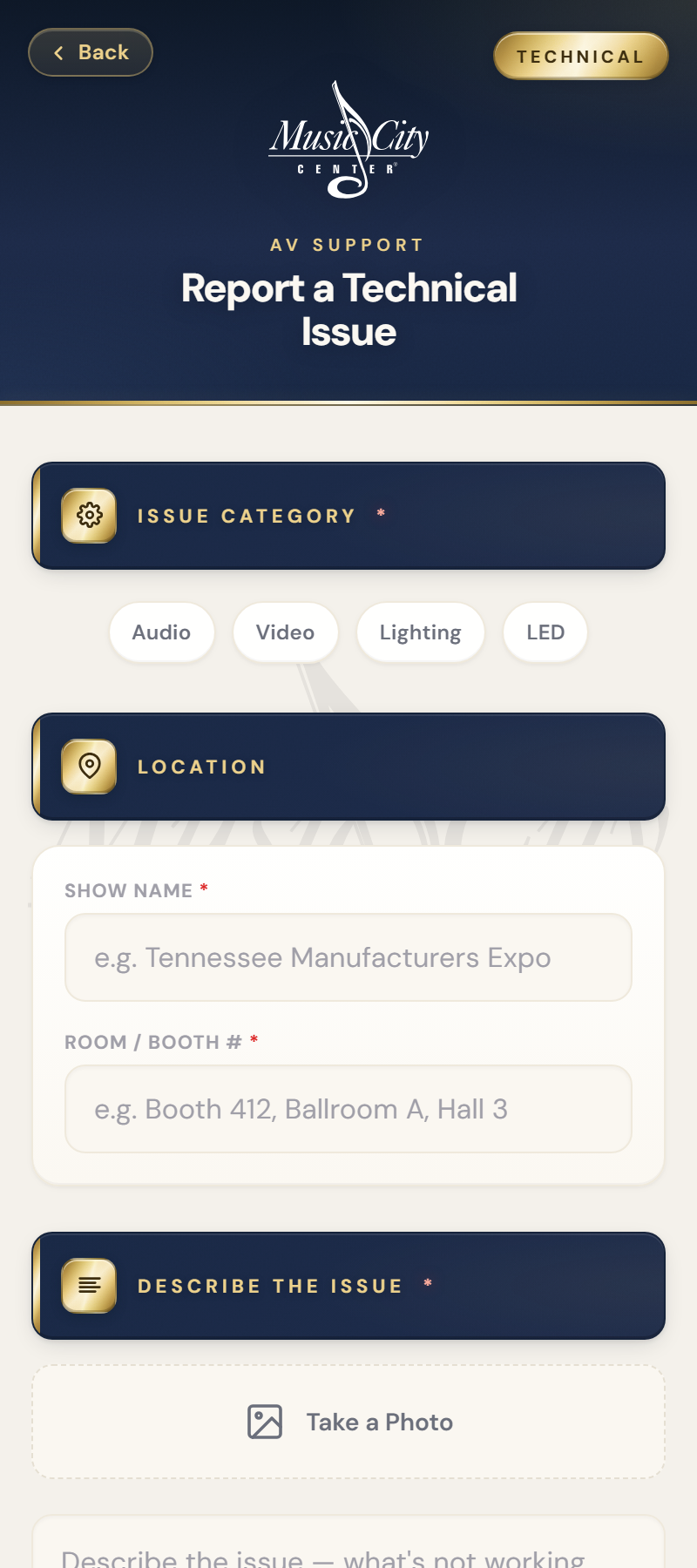
A ticket the AV team can act on
Category, exact location, a photo of the problem, and a written description, submitted as one structured, timestamped ticket with a confirmation the reporter can see.
What changedThe AV team gets the context up front instead of gathering it again by phone.
One request, the right desk
The apps were the easy part. The value was that every request left a record and reached the team that owns it.
- Technical AV issues and event or sales requests route on separate paths from the same form.
- Every ticket carries a timestamp, a room, a photo, and a history, a record that did not exist when problems were raised in person.
- A submission confirmation tells the reporter the request was received, so nothing gets asked twice.
What the two apps produced
Venue teams and event clients gained direct request paths with the context the responding team needs.
- Crews raise a ticket by scanning a QR code in the room, timestamped and photographed, instead of relaying a problem by word of mouth.
- Event clients get a self-service way to ask for help from their own room, in the venue's branding.
- Leadership can see what was reported and how it was handled, a record that did not exist before.
What the approach changed
We connected the person reporting a problem to the team responsible for fixing it. Room context, a photo, and routing removed the information staff used to gather twice, and the request history gave leadership a way to see the work. The build was two apps; the change was that a problem in a room became a tracked ticket in seconds.
